Author: Wendy

  • Book Review: Big Summer by Jennifer Weiner

    Book Review: Big Summer by Jennifer Weiner

    I read it in two days. Hardcover.

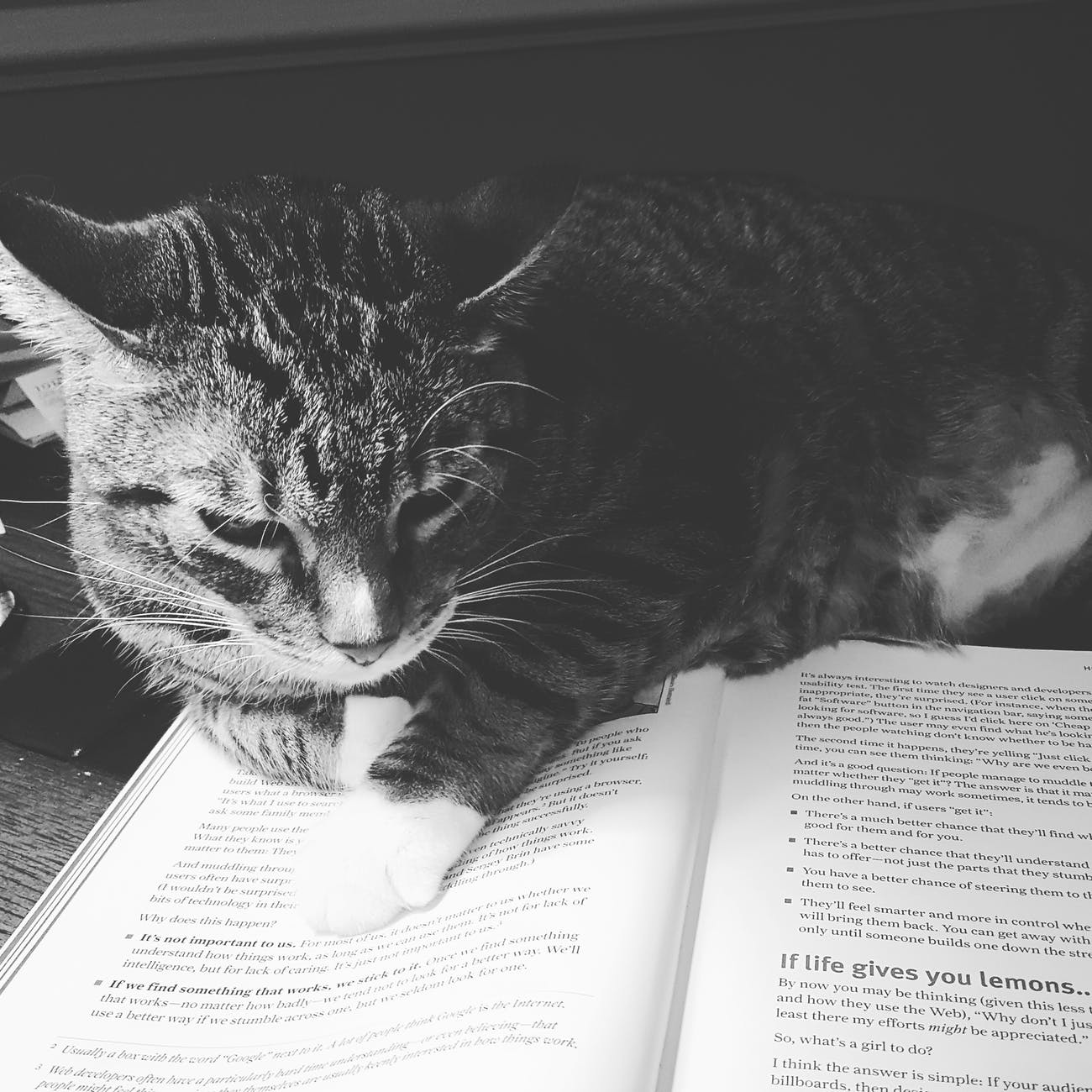
    Many of Jennifer Weiner’s books are addictively engaging page-turners, and Big Summer did not disappoint. This frothy confection of a beach read was as delicious as some of the foods that are lovingly described by the main character. Since March, when I no longer had to drive to work, I’ve been able to return to one of my true loves: reading. I’ve devoured about a dozen books, both paper and online, and this title was an easy and delightful addition to the stack. It arrived Thursday. I started reading Friday, and by 2:00 pm Saturday, I was reading the acknowledgment page.

    I tend to think of Jennifer Weiner’s books like Judy Blume for grown-ups. I loved Judy Blume’s books when I was a kid. The main character usually had a relatable perspective and a wry sense of humor even if their particular issue was not a concern of mine. They were confused young Jewish teens from New York City. Daphne Berg, the main character in Big Summer, hits all these same points, except she’s a young adult. Daphne is a full-figured gal (relatable) in New York City who loves crafting (unrelatable). She is making a name for herself as an influencer on the Internet. I’m just starting to learn about hashtags and blogging and Instagramming, so reading about how she was monetizing her blog, getting paid to try products and clothing, and how she was cultivating her online persona was interesting and educational. Daphne’s main issues of self-esteem and a complicated friendship with a former BFF are not my issues. Like a Judy Blume novel, I could read about her struggle and enjoy judging Daphne for her choices. Her world is very different than mine, granted, but she is such a sympathetic character that I wanted to root for her through the end.

    The story is a bit of a summer vacation. A trip to New York, to Boston, to “the Cape.” With a high-profile wedding, mean girls, and glimpses into exclusive prep schools, there was enough to catch my interest. It was the plot twists that prevented me from putting the book down. Daphne’s amateur sleuthing brought Nancy Drew to mind. The mysteries to be unraveled are not reliant on brilliant intellectual puzzling, and there’s a little bit of predictability that is actually rewarding. Fans of Jennifer Weiner, you won’t be disappointed. If you’re new to the author, enjoy the ride!

  • It’s What’s Inside That Counts

    It’s What’s Inside That Counts

    Completing the Doctor Lid Desk

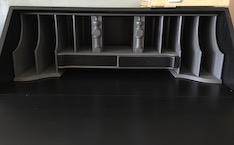
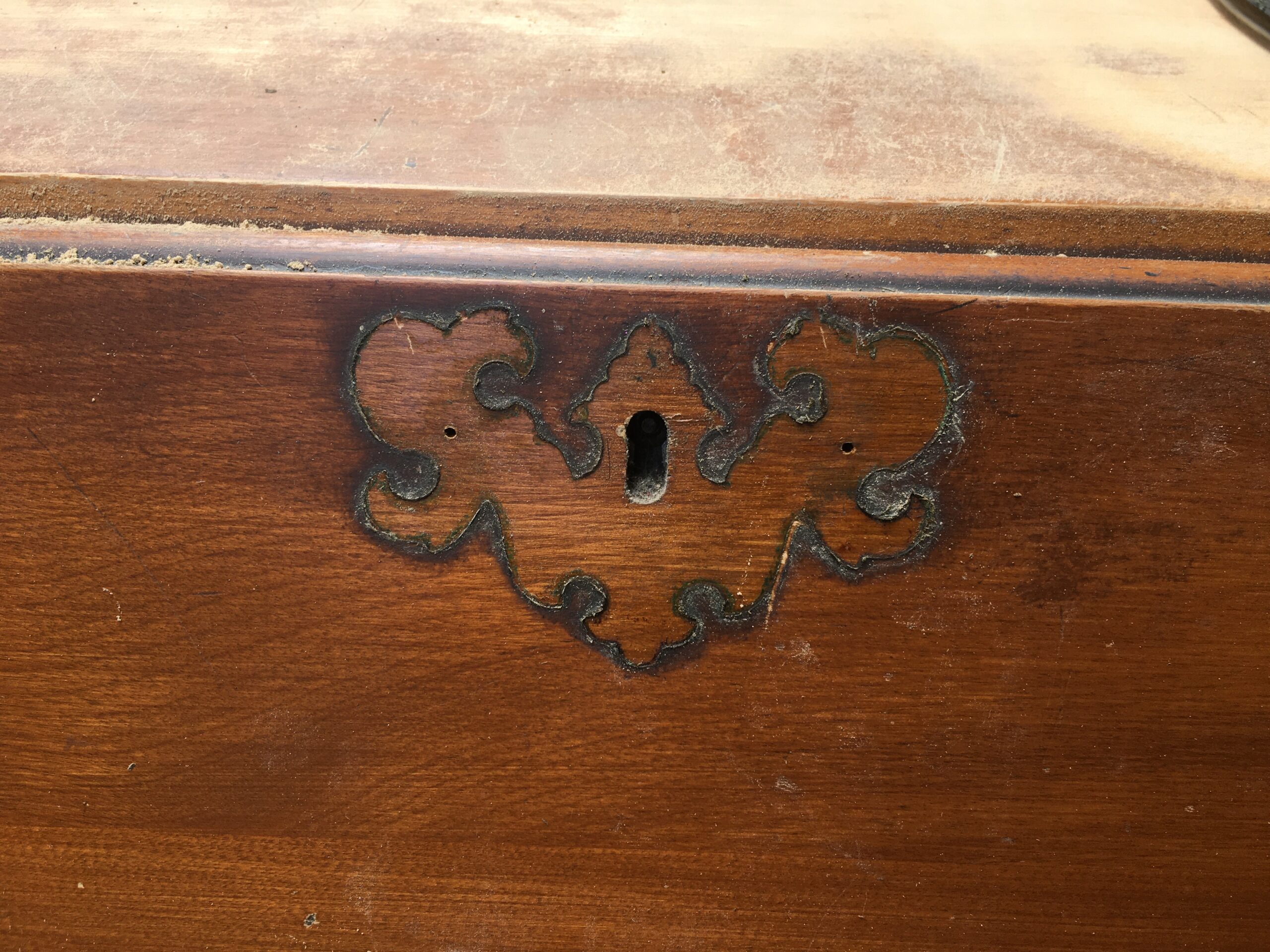
    Fait accompli! Aside from the still-unattainable metal arm and the sought-after “perfect” keyhole cover, we’re calling this “Done!”

  • Good Trouble

    Good Trouble

    John Lewis and the Ongoing Fight for Voter Rights

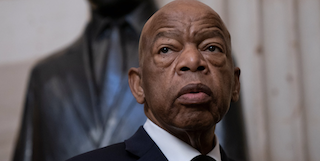
    US Representative John Robert Lewis passed away last month, but this afternoon, he’s all I can think about. Today I watched John Lewis: Good Trouble, a documentary by Dawn Porter, which chronicles Rep. Lewis’s sixty years of activism and shares a great deal of wise words. John Lewis (1940-2020) spent much of his life fighting for civil rights, first side by side with Martin Luther King, Jr., and later during 17 terms as a congressional representative for Atlanta, Georgia. As a student, as an adult, as a Congressman, he lived a life dedicated to making things “right.” While out for my walk a few weeks ago, I had been mesmerized by his story, as presented in a podcast in Oprah Winfrey’s Master Class series (http://www.oprah.com/own-master-class/john-lewis). That was my first introduction to Congressman Lewis, him telling his stories right into my ear…his stories of commitment, of violence towards him and others, of his dedication to the practice of non-violence, and his unwavering belief that we the people have the power to make things better for all. I listened to the podcast about a few weeks before he passed, days before I took my teenagers out to a Black Lives Matter march. He’d already made an impact on me.

    In the podcast and in the film, I was stunned to hear his detailed first-person accounts of the Freedom Rides, of desegregating lunch counters, of Selma, and the March on Washington. How he continued to follow the principles of nonviolence and believe in peace and love. The film does a fantastic job of mixing interviews and documentation of John Lewis with archival footage, and interviews of those whose lives he had touched. Watching him watch videos of these famous incidents was moving and inspiring. I had seen the movie Selma and recently showed it to my kids, so the story of that march was fresh in my mind, even though it was not something either my kids or I had learned about in school. John Lewis was arrested over 40 times in his life, for nonviolent protests. Relatives of mine think all protesters should stick to the sidewalk, and not inconvenience traffic. I can’t get over that, even though our local march (150 people strong) was required, by the motorcycle cops attending us, to stay on the side of the road for “our safety.” It is a busy, hilly thoroughfare – wearing masks, we obeyed. Still, I keep thinking, what can I do?

    “If you see something that is not fair, not right, not just, you have a moral obligation to do something about it.” – John Lewis

    Following the film, I watched a panel discussion, led by the organization VoteRiders (https://www.voteriders.org). Their mission, from their website: VoteRiders is a non-partisan, non-profit organization founded in 2012 with a mission to ensure that all citizens are able to exercise their right to vote. VoteRiders informs and helps citizens to secure their voter ID as well as inspires and supports organizations, local volunteers, and communities to sustain voter ID education and assistance efforts. It’s frustrating and horrifying to hear about the ongoing voter suppression in certain states (calling you out, AZ, GA, WI, FL, MI, NC…). Voters are so confused by changing rules about what they need to do to register or to be able to vote on Election Day, some become discouraged and choose not to vote. Some believe their vote won’t matter anyway. Some arrive with full intention but are hampered by new requirements to provide ID or a physical address. Why does a legal citizen need a physical address to be able to cast a vote? The county where they are registered should be enough. Why is there still only one day – in some states – that people are allowed to vote? I’m thankful for new processes in my county, in California, that allow me to vote EARLY, even a week before the official date. Now there are multiple places where I can go to cast my vote, instead of just someone’s garage or a school in my neighborhood. These changes make a world of difference to people who might not get time off or be able to shift their schedule to get to the polling place. Now, with stay-at-home requirements, offering mail-in and absentee ballots should reduce the lines that were seen at polling places back in 2015. And yet in other states, polling places have been reduced, especially in lower income areas or areas with a high population of Black voters. We see it. It has to stop. VoteRiders is doing their best to work within these systems as they change – to inform voters of the requirements, to help them get to polling places, to make sure they have the chance to exercise their right and their civic duty to vote. It’s noble work. I’m applying to help them with phone bank and letter writing campaigns, while I have some time in the next 90 days. (VoteRiders accepts donations and volunteer assistance of all kinds. Their phone number is 844-338-8743). Working within the system may be all we can do before November 3, 2020 – get people to the polls to allow their voices to be heard. More importantly, though, how do we make the suppression STOP?

    “Never, ever be afraid to make some noise and get in good trouble, necessary trouble.” – John Lewis

    Make noise. Get in good trouble. The murder of George Floyd has brought a time of reckoning. People are taking to the streets to protest not only police brutality against Black people, but the systemic racism and imbalance that allows it to happen, allows the protests to “fade away” when there isn’t any more news coverage. The digital age, the divisiveness of the current administration, and yes, greater awareness (thanks to non-stop infotainment) is sending people of all races to the streets, to the primaries, to their companies. The list of demands created by #WeSeeYou and presented to “White American Theatre” confronts systemic practices at established American theatres, pointing to specific things that happen and ways to change them. A petition signed by over 50,000 BIPOC artists accompanies this list. 50,000 people from onstage and backstage are making noise for change. American Theatre cannot go back to “normal.” While theatres are closed due to the pandemic, theatre companies, producers, and owners have plenty of time to reconsider and rework their practices and their seasons, their accessibility and their philosophies. There’s work to be done. https://www.weseeyouwat.com

    Perhaps the traditional invisibility of older women can work to my advantage. It’s actually a superpower, when used correctly. I can infiltrate, study, learn. The Wall of Moms in Portland, protecting the protestors and the police as federal agents descended under trumped-up orders – those Moms used a superpower that is mine, too. The “Mom voice.” Don’t make me count to three! Stop It. Right. Now. That “I mean business” voice immediately makes the target of the voice revert to guilty childhood. Moms linking arms and singing and chanting together meant business. What if they’d all shouted, “that’s ENOUGH! Go to your room! Now!”

    I asked the panelists what advice they have for white allies. Michael Bennett, activist and former NFL player, told me to listen. To get to know the stories, because I haven’t experiences them myself. “Get into the morality of it,” he said, the morality of goodness on behalf of human nature. Not for good business practices (to make money), not to assuage my conscience. For the people. Like John Lewis says, for “the soul of America.” Michael told me to talk with people who have been marginalized and help them share their stories. Specifically, right now, I can apply this in my work by advocating for and including BIPOC artists and audiences. I can reach out to potential voters in states where injustice is happening and help them exercise their right to vote. I will amplify those voices in my circles of influence, and be the change I want to see in the world. What will YOU do? Like John Lewis, let’s make some noise. Let’s make some necessary trouble for change, and hold only love and peace in your heart.

     “You are a light. You are the light. Never let anyone — any person or any force — dampen, dim or diminish your light … Release the need to hate, to harbor division, and the enticement of revenge. Release all bitterness. Hold only love, only peace in your heart, knowing that the battle of good to overcome evil is already won.” ― Lewis on being human in Across That Bridge: A Vision for Change and the Future of America

  • Transformation – Dr. Lid Desk – continued

    Transformation – Dr. Lid Desk – continued

    The Doctor Lid Desk is almost done!

    The exterior, interior, lid, and drawers are all a lovely, saturated black stain (Varathane Poly +Stain, Black Satin). The lid has been attached with its original hinges, with layers of polyurethane removed. The drawer pulls have been replaced, removing the old brass “colonial” look with a mottled, stamped cast iron model. I spent a little extra on the pulls because I liked them so much!

    New Drawer Pulls – Sturdy & attractive, like me!

    Still need to replace the plate around the keyhole on the lid. The lock is intact but the skeleton key is missing, and it’s not like I will be storing valuables in the desk, but it’s a really cool part of the vintage design. I visited Muff’s Antiques in the Orange Plaza (http://www.muffshardware.com) and my mind was blown with the selection and the artful displays of vintage knobs, slides, locks, hinges, lids, hooks, and more. Oh, and they have skeleton keys, too! They had a variety of keyhole plates in different colors, sizes and finishes, but none leapt out as “the one.” I was able to do a quick assessment of how much my old colonial brass drawer pulls might be worth, though. I wonder if Muff’s would be willing to do a swap…

    The desk is missing one metal arm that pulls out the pieces to support the desk lid, when open. It’s a very simple piece that sits low against the desk, and attaches with screws. So far, we haven’t been able to locate anything similar online or at Muff’s. The owners there suggested a salvage place in LA, and my wife reached out to them via email. No word yet, so we are still looking, and considering hitting up friends who do a little metalworking. It’s a fun treasure hunt, and it won’t hold up the progress.

    Finally, I need to paint the insert. With a lot of elbow grease and determination, the interior letter organizer is almost to a bare wood state. It has taken DAYS. We had even upgraded the stripping agent to the “extra strength,” but it still took some scraping to get the original finish out of the detail work. Sandpaper, razor blade, wire brush, wet, dry, steel wool, you name it, I tried it! With a few hard-to-reach areas and a few stubborn spots left to go, I’m thinking paint will be more forgiving than stain.

    It occurs to me that the furniture I had previously refinished must have had very little detail work. Let’s see…patio furniture, picnic table, wooden couch frame by IKEA, early-American style dresser, and my first parentally-assigned effort, a faded ping-pong table…yep, nope…lots of flat surfaces and nary a beveled edge in the lot. The extra work is fine, though. The attention to detail is good for me.

    While working on the desk, I’ve been listening to Elizabeth Gilbert read her book, Big Magic. Her soothing voice and gentle chuckle accompany me as I scrape and stain. Her ideas of how to lead a “creative life” are coming at just the right time. While staying safely at home and furloughed from work due to the pandemic, I have time to consider what I’d like my life to be like, when and if things return to “normal.” The repeated motion of sanding, scraping, and brushing is hypnotic, contemplative, and allows me to quiet the rest of my mind and hear her words. I don’t have to drive my kids somewhere, there’s no video meeting I must attend, and my wife is on duty for making dinner tonight. In the book, Liz Gilbert focuses mostly on her writing, her process, and draws parallels of what the listener (or reader) could do to lead a more creative life. Mind freed by repetitive motion and lack of obligation, I’m able to hear and understand, and to apply some ideas as she says them. For example, her mother’s adage that it’s better to have something “done” than to have it “done perfectly” allowed me to accept some imperfections in the desk lid and call it “done.” Liz’s own assertion that ideas are separate entities sounds perfectly reasonable when I need to stop sanding or staining and type an idea into my Notes app, or take time to write down last night’s dream before I continue working on the desk on a given day. I have often had the distinct sense of an idea “hitting” me – actually, this will be a blog post at a later time – and Gilbert’s discussion of this theory keeps me focused and sanding for the better part of an afternoon. This influx, this permission, to do something differently and explore my own vision is infused in this desk restoration, and both the desk and I are better for it.

    I think I’ll paint the organizer a different color than black. It’ll be a cool surprise when the lid is opened. My daughter pointed out that a lighter color would camouflage any letters in the organizer, while a dark color would make them stand out – an aspect I hadn’t considered at all. Hmmm… I happen to have a warm gray leftover from a past home improvement project, but you know what? There’s also a can of purple!

    It’s what’s on the inside that matters….

    Note: This post contains affiliate links. If you’re interested in the drawer pulls or Elizabeth Gilbert’s book, click the link. If you make a purchase through the link, I may receive a small fee.

  • I sweat from the head

    I sweat from the head

    “Forget sweating like a pig,” a friend recently commented to me. “I’m sweating like a 50 year old woman!”

    Oh, can I relate! It’s not the most glamorous subject, but lately, sweat is a part of my daily life. When did this start? When did it change? How is it still changing – and will it stop?

    Breaking out in a sweat after my shower, causing my facial moisturizer to bead up and drip – Mopping my brow while strenuously boiling water for pasta or washing dishes – Unable to stand the smell of my baseball cap and workout clothes post-walk – sweating on the back of my legs enough to leave visible moisture on a chair and stains on my clothes – evaluating the layers I need to wear to an office meeting or presentation to cover armpit sweat and/or to change into later – leaving a slimy pool on the headrest of the Pilates reformer – cutting my hair really short when I know I’ll be working long-term in a humid location – using antiperspirant and baby powder under my undergarments to prevent show-thru…sound familiar?

    As I get older, things my mother experienced come floating back to mind. For example, she always kept her very curly hair very short. This had several advantages. Little styling required, her hair was great to deal with when she swam in our pool (it sprang back into the tight curls) but it was thin enough that it didn’t ease her burden in humid locations. At home in Southern California or on our road trips around the country, she often mopped her large forehead, saying “I sweat from the head” with a laugh. Now, when 10 minutes of vacuuming causes water to drip from my temples, I hear the echo of her statement and her laugh, but it’s not often humor that I feel.

    I was never an athlete and we live in a desert, so for a long time, I had attributed my new personal humidity to the long charity walks I was doing, and the atmosphere in China when I worked there. My workout clothes reeked in new and disturbing ways (no matter what I ate or how much deodorant I used). I had to have a scarf or bandanna with me at all times in Shanghai (though sometimes that came in handy for filtering the air as well). I noticed some of the expatriate women I worked with in China also kept wicking scarves around their necks, but it wasn’t until a couple of years after that project that I started to think the changes were hormonal.

    Those gals with the scarves were a few years older than I was. They made no mention of hormones, and no complaint other than to agree the 98 degree temp with 98 percent humidity added to a challenging work environment. So I didn’t think anything of it. I went to Florida a couple of times for other assignments and again, just figured I was not used to the humidity. My significantly younger female teammates were also significantly fitter than I, so I attributed my extra sweat to extra weight. But then last summer, I went to Tokyo, where I was one of only two American females on our work team. The half-mile hike from the bus stop to the office was not a great way to set me up for the day! I’d arrive sweaty from the head, of course, not to mention the back and the crotch – so lovely! And it was taking me a very long time to cool down, so I’d get there early and hang out in the freezing-cold conference room. I carried a stack of moist herbal towels with me (Herban Essentials), which were a revelation. Late in the trip, I found out that there was a “cooling room” among the office suites. I vow that I will take advantage next time, though it doesn’t afford the privacy I need to wipe down completely with my little herbal towels. Also in Tokyo, I spent an evening being touristy with a male colleague who was half my age. We had a blast and saw a lot, while I envied his energy, tried to keep up, and made every effort to stay downwind. Again, the humidity there is profound, but I could no longer ignore that this perpetual moisture and odor was just happening to ME.

    Just prior to the pandemic, I gave a presentation at work – relatively high profile, a idea that was being ushered through the system at a pretty quick pace. I had confidence in the concept and was excited to present to a senior executive. I carefully planned my wardrobe of the day, since business wear was in order. Some personal mistiness was expected, since the office was way down the end of the fourth floor and the presentation was for the location president. And this was the first time I was pitching this kind of a creative idea. When I’d been sitting in the air conditioned ante-office for a while, chatting with my colleagues, I felt my heat rising. Great time for a hot flash! Nerves certainly contributed but now the waterworks weren’t going to stop any time soon. I started to fan myself and the woman who was also pitching today – a little older than I am, also heavyset – asked if I was okay. “Oh yeah,” I said out loud, and then mouthed, “hormones,” to her. She picked up a magazine from the coffee table and sympathetically began to fan me with it. I wasn’t entirely sure this was a hot flash, but the sweat was real, so either way the extra air movement helped. Sisterhood in action…despite the fact we were being pitted against one another! Lucky for me, the president I was pitching to was a woman in her late fifties, so I knew that if the hot flash came back, she would understand me fanning or taking off my jacket.

    Interesting world in business, huh? There still aren’t enough women in high places in my workplace, but in this moment, I didn’t have to suffer the embarrassment of standing out as female. As a woman of established age and experience. Though I was (and am) a sweaty-ass peri-menopausal woman, there was a sense of solidarity, and I was able to present my creative idea to a room full of people with full confidence. I continued to sweat from my head and had a square of paper towel in my pocket available to mop up the droplets, and I was first to pitch. Luckily, Mme. President spent 20 minutes getting grounded on our topic, so my tropical season had mostly passed by the time she was ready to hear my concept.

    As summer comes in So Cal, I won’t be the only one sweating. I’ll blend right in with my sweaty teens and Pilates group. Later in the coming months, though, pandemic allowing, I have some upcoming work assignments in Florida and Tokyo again. I will pack lots of herbal towels, antiperspirant, powder, and hankies, for sure. I hope by then that I’ll either be through this part of the experience, or be surrounded by some more sympathetic sisters…or be so used to my personal humidity that, like my mom, I can accept, explain, and laugh it off with ease.

    I try thinking of dry places…except the desert makes me SWEAT!

  • Transformation – Doctor Lid Desk

    Transformation – Doctor Lid Desk

    Sometimes, you just need to make a change in something you see every day. The goal this time: transform a piece of inherited vintage furniture into something I really loved.

    This “Dr. Lid Desk” welcomed visitors to my parents’ home as long as I can remember. The front piece – or “lid” – folds down to create a sizable writing surface. We always referred to this item as “the Secretary.”

    “Dust the Secretary.”

    “It’s in the Secretary. Top drawer.”

    “Look behind the Secretary.”

    When I was a child, the top drawer was where my mom kept the books of Disneyland tickets. The “E” tickets had all been removed from the ticket books, of course, having been used on a trip to the theme park, but sometimes a coveted “C” still remained. That’s about as magical as it got. The interior, behind the lid, has always been something of a catch-all. I think the only time I remember seeing someone using it as a desk was when my mom would put the lid down to create a surface to write a check or sign a note for school. One drawer held a large Tripoley game board, and another held vinyl or plastic placemats.

    I’ve had possession of the Secretary for about 20 years, when my widowed mother downsized from our beloved family home to a somewhat depressing condo. She didn’t have room for the piece, so it came to live with my sister and me. I’ve kept up the traditions of slathering it with Pledge, dumping random things behind the lid, and yanking the drawer pulls off of their stripped screws. I keep tablecloths and fabric napkins in the drawers, with the top two drawers full of gift bags, wrapping paper, and ribbons. Never really loved the Early American design of the Secretary. I’m surrounded by it in the pieces I inherited from my parents and various other relatives, but I lack the resources to purchase new furniture and I have a hard time getting rid of items made from Real Wood in favor of lesser-quality particle board. It was overdue for a makeover.

    The original order slip was still stapled to the back of the desk. The date of order – September 1953 – meant that this preceded my parents’ marriage, and was apparently purchased by my maternal grandparents. No wonder it’s in my earliest memories, and seen in our earliest home movies!

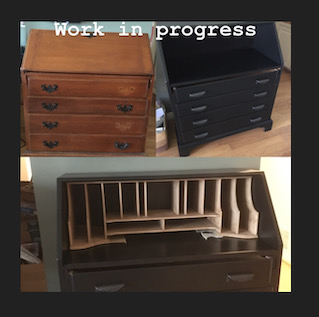
    This is a perfect manifestation of the creative exploration and practice that has been occupying my mind and my time while on furlough. While I could have just refreshed the color and replaced the missing pieces, I have decided to change the look of the piece significantly. Sanding is complete and stripping is underway, and the new drawer pulls have arrived. (I love them!!) Patience and elbow grease, plus my wife’s fun array of cordless tools, are making progress possible. My previous makeover effort can be seen in the photos. The red furniture was originally natural eucalyptus, and the construction was flat and simple. On this new project, the detailing and the factory-grade varnish on the Dr. Lid Desk are definitely providing new challenge! Stay tuned…

  • 2020 – Imperfect Vision

    At first, all was well…er, normal. January and February, my work was ramping up. There was my 75 minute commute to LA twice a week for creative meetings, my daughter’s Color Guard competitions, Girl Scout meetings, Football Booster meetings, veterinary appointments for the dogs and cats, driving 15 year olds to and from school and to and from friends’ houses, lunches with my friends on the days I worked from home. There was a family calendar so full, we had to scribble in the margins and add sticky notes. I directed a play in a small theatre, to good reviews and great response. One of my actors had a “real job” in risk management, and she was concerned about this virus that was shutting down China, but I wasn’t worried. We were busy and there was so much to do.

    Stay at Home – Virtual Vision

    And then, in the middle of March, things started to change. I started working from home full time. Suddenly, I had three hours back, two days a week! I bought new books – one electronic, one paper – and I finished them. My dogs were ecstatic to have me home all the time. I washed my hands a lot, took Airborne every day, and insisted that my kids do the same. My colleagues asked if I was worried about sending my teens to school and I shrugged off – nah, they’re healthy and hearty and besides, somebody really has to cough on you to get it. And then… they shut down the school.

    Someone asked me if I thought Disneyland would shut down – the bright beacon of hope and happiness, right here in Southern California. Nah, I shrugged again. Disneyland had had anthrax scares, visitors with measles and Legionnaires’ Disease, and a rigorous, dedicated custodial crew. Midway through the month, though, my wife was told not to come to work after a certain date, because her place of employment – Disneyland – would not be open the following week. The Disneyland Resort had not kept the gates closed since September 11, 2001. The Disneyland Resort is one of the largest employers in Orange County, and thousands of cast members were suddenly being asked to work from home. It’s really hard to operate an attraction, perform in a show, or sell Disney churros from home, so most of those cast members went home saying “see ya real soon.” A very few stayed on to keep things maintained and to plan for reopening.

    A former cast member of mine, who now worked for the LAPD, tested positive for the virus and recorded her journey on social media. There was no more shrugging it off, this was real, but we were still busy. Wash your hands, stay home, masks optional.

    I’d worked from home for the better part of a year, only going up to the LA office twice or three times a week. Now all of a sudden, in the first quarter of 2020, my twin teenagers were doing their sophomore year from the house, using their phones, one iPad, and the shared desktop computer. I learned things about the Bolsheviks that I’d never heard before. The Girl Scout meetings went virtual, and the attendance was actually higher than when we met in person. The Color Guard competitions were devastatingly cancelled. My awesome wife started knocking through the “Honey Do” list – you know, those little repairs around the house you never have time for. She even hung pictures on newly painted walls. I sat through five hours of video meetings every day, shushing the dogs and the kids and the hammering. We created an office upstairs for me. We played card games online with friends around the country, we checked in with dear ones in New York, Seattle, and DC. As restaurants closed, we cooked dinner and played board games with the kids. We watched Broadway shows and concerts online, visited museums across the world. And then my meetings stopped.

    Furlough – Lack of Vision

    Shortly afterward, the work stopped. My work stopped, that is. With no reopening date in sight, The Walt Disney Company furloughed thousands of employees, across the country. My meetings, full of brilliant, creative people and incredible vision, would go on without me. I felt like I was going on maternity leave. Truly! I was handing over my parts of the projects for others to carry forward while I was “away.” Actually – a story for another day – this was easier than awhen I went on maternity leave, because I have full confidence the projects are well supported, and that I’ll be able to pick up where I left off, in the near future.

    I pretended the furlough was only two weeks. I enjoyed a full “staycation” at my house during that time, sleeping in, reading, watching movies and drinking in the middle of the day. The nearby riverbed and local regional park allowed me some bird-watching and forest-bathing while I walked, listened to TED talks and personal stories. My wife took a break from repairs and switched to creative endeavors, like building a set of hanging shelves for the backyard. The family calendar was empty. [See my article “List-less” on Linked In: https://www.linkedin.com/pulse/list-less-wendy-ruth/] Orange County had managed to “flatten the curve” so there wasn’t tremendous fear in our neighborhood, just inconvenience, like waiting in line to go into the grocery store and not finding what you needed. A friend reached out to connect and commiserate about menopause, and I welcomed the conversation and distraction. Without a full family schedule and the entire Internet at my disposal, I read and researched so many things. I began to look into alternate career paths, just in case the theatrical and theme park industries that I had been doing all of my life didn’t come back the way we expected. My nighttime dreams stayed vividly in my mind well into the morning, so I started to write them down. I felt a fog clearing.

    No Justice, No Peace – Clearer Vision

    The world began to see disturbing videos of Black men being killed before our eyes. Two months after the incident, the video of Ahmaud Arbery’s murder in Georgia was seen across social media and then the news. Two months after the incident, because of public pressure, arrests were made. On May 25th, viewers saw a police officer kneeling on George Floyd’s neck, because bystanders filmed the action while begging the officer to stop. People took to the streets in protest. They were not interested in staying Safer at Home, not when it was so clear that COVID-19 wasn’t the only real danger.

    The week before George Floyd’s murder, people gathered (against CDC recommendation) to protest that their rights were being violated. They shouldn’t be forced to stay home, they should be allowed to eat in restaurants and get their hair cut, they wanted people to go back to work to serve them, as was their American right. They were tired of being oppressed, they said. Overwhelmingly, the people at those rallies were carrying American flags, wearing red, white, and blue, shouting at police. Overwhelmingly, they were white. There were no reports of police pushing, arresting, or tear gassing any of these protestors.

    I took my teenagers to a small protest in our neighborhood. There was too much risk, between the virus (still with us!) and the rubber bullets and the opportunistic looting and burning to take my kids to downtown LA. Plus, I wanted to stand with the people who lived near us, to show our neighbors that we as a community were united in this fight against real oppression. A different kind of fog was lifting, even in Orange County. My daughter groans about my “lectures,” but my son and my daughter both chose to watch the movie Selma with me one night. I talk to my Polish/Irish son about privilege. As I look at the kids’ yearbooks, I am reminded that their high school is very diverse. Slurs and microaggressions are laughed off as “jokes,” my son says, in his casual white-boy nonchalance. He’s treated to one of my “lectures” about putting himself into another person’s shoes, and reminded that it’s up to him to be aware and to stop those actions. We all have work to do.

    Division, Revision, Decision

    As summer arrives and school ends, protests continue, restaurants and stores open, and COVID-19 cases rise. The officers charged with George Floyd’s murder await trial. Voters in Georgia wait over five hours for the ability to cast their vote. Kids in Orange County begin (or continue to) hang out at their friends’ houses. People can get haircuts but they shouldn’t sit on the beach. There will be no Pride parades, and the government is turning back the clock on LGBTQIA+ rights. I was working in downtown Los Angeles, less than a mile from City Hall, when the verdict was read in the Rodney King case. By the time I left work, the palm trees in the middle of the freeway had been set on fire and the crowd near City Hall was furious and violent. I’m hoping the Missouri verdicts will come down on the right side of law and of humanity, but a quick scroll of social media still makes me worry. Oh, and there’s an announcement that the Disneyland Resort is planning some dates for reopening.

    I’m flipping through my son’s unsigned high school yearbook and noticing that there’s absolutely no mention of the fact that the last three months of the year were not spent on campus. There are sunny and weirdly nostalgic articles about cheering for school teams (all athletics were cancelled mid-March, and the football team celebrated two whole wins this year), and the spring school musical (which was also cancelled). I have no doubt that my kids won’t forget the strangeness of the end of their sophomore year, but it’s clear the yearbook won’t help them remember it. The events of this year will still make an impact on them – we’re not done yet. And I wonder how clear this 2020 vision will be.

    Me, I started a blog. This is how I will remember what happened in 2020.

    As my hormones rage and wane, as I wait to be called back to work – or not, as the planets turn retrograde and the world turns upside down, I have a place to process. I hope you’ll join me.